
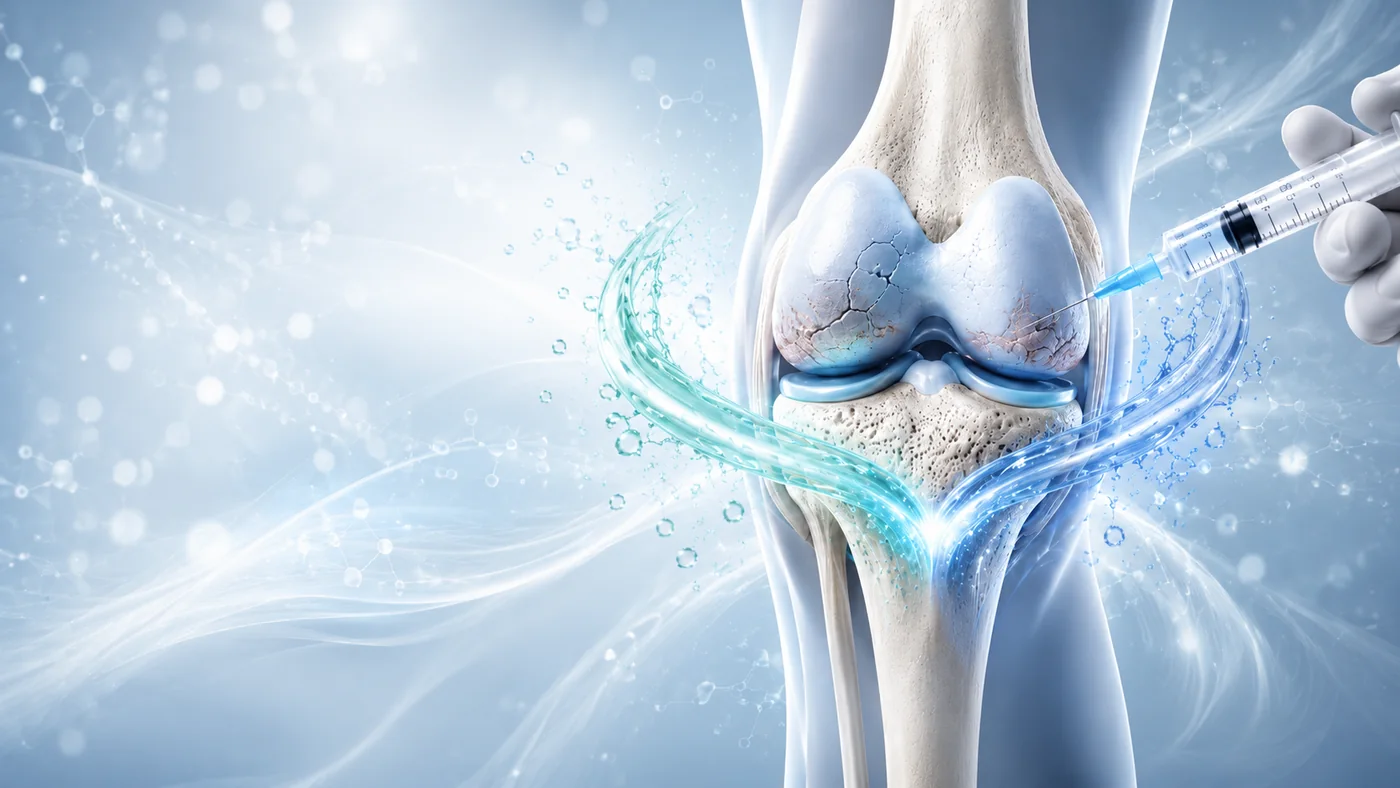
Osteoarthritis (OA) is the most common joint disease; its prevalence increases with age and it represents the leading cause of disability in people over 65 years of age. The knee is the joint most frequently affected.
Introduction
The onset and progression of OA involve degenerative, inflammatory and reparative processes that give rise to structural changes throughout the entire joint complex. A major component is the degenerative process in the cartilage: it loses its integrity and decreases in volume, and the synthesis of collagen and of other constituents of the extracellular matrix is impaired.
Where oral therapy is insufficiently effective, intra-articular injection therapy is usually recommended. The agents most commonly used are corticosteroids and hyaluronic acid (HA). Corticosteroids provide a temporary anti-inflammatory effect, but their significant adverse effect is chondrotoxicity. The use of HA is well established — it improves the elasticity and viscosity of the intra-articular environment and stimulates chondrocyte activity. HA alone, however, may not deliver a longer-lasting effect.
Current research is focused on enhancing the therapeutic potential of HA by combining it with further bioactive substances whose effects are mutually complementary. Such substances include the chondroprotective agent N-acetylglucosamine (NAG) and the amino acids proline and glycine. NAG is the most effective form of glucosamine, does not affect glucose metabolism and inhibits matrix metalloproteinases. Glycine and proline are fundamental constituents of collagen. ALGYL GGP, a preparation based on a patented gel that combines HA, NAG, glycine and proline, has recently become available.
Clinical study — materials and methods
A prospective, randomized, blinded study was conducted between January 2023 and January 2024 at two clinical centres in Turkey. A total of 111 patients aged 40–80 years with grade 2–3 gonarthrosis according to the Kellgren-Lawrence classification and with symptoms lasting at least 6 months were enrolled. Approximately 88% were women.
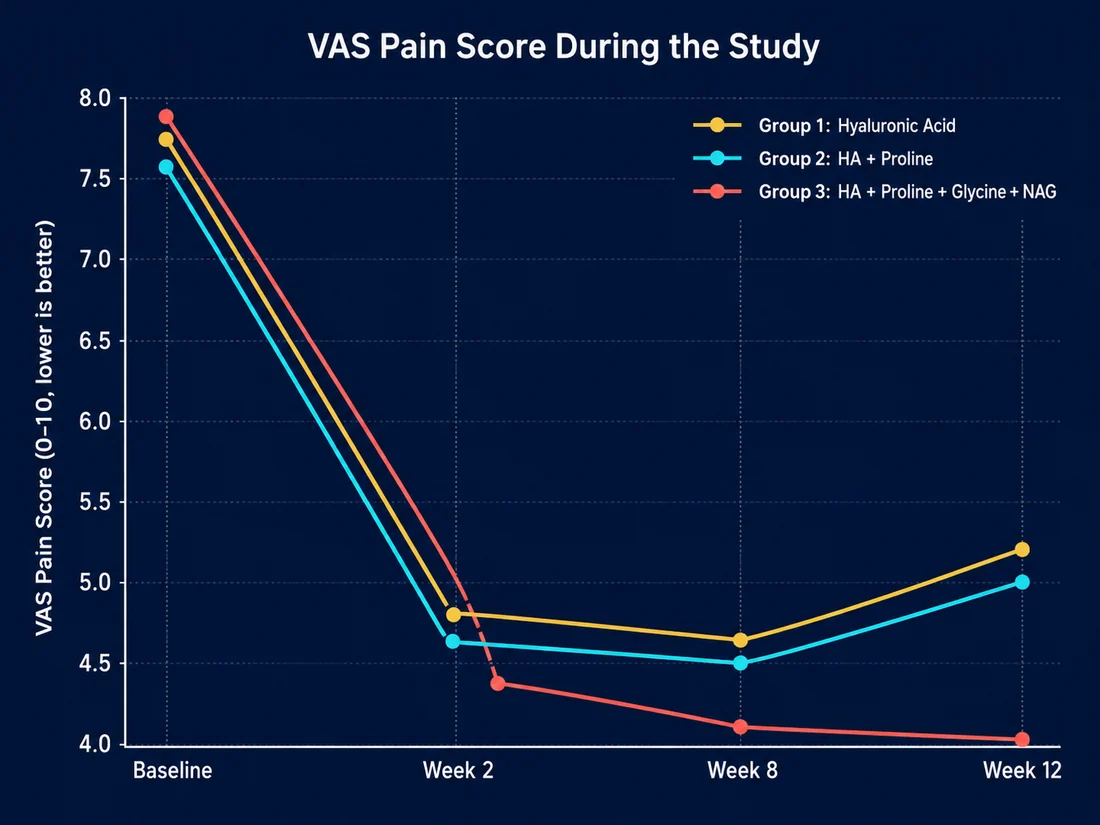
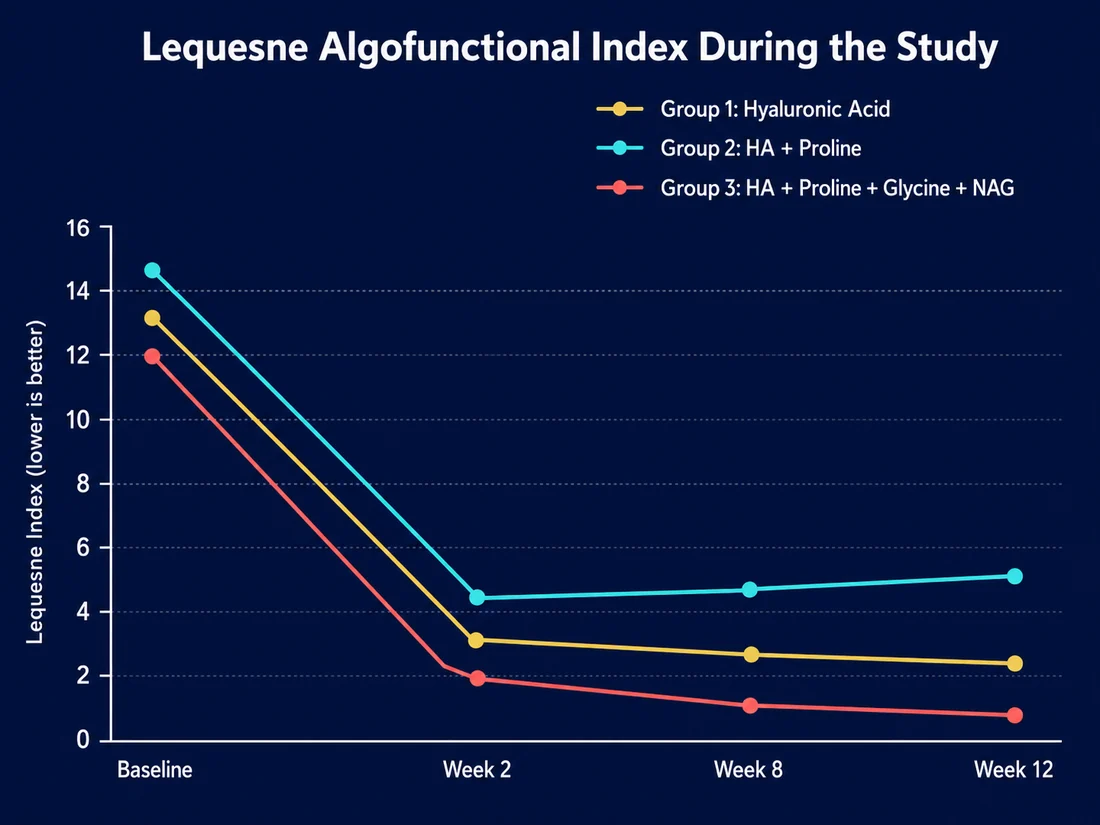
Patients were allocated to three groups: group 1 (n=35) — HA alone (40 mg sodium hyaluronate); group 2 (n=29) — HA + 30 mg L-proline; group 3 (n=47) — the four-component combination HA + N-acetylglucosamine + glycine + proline (ALGYL GGP). The WOMAC index, the Lequesne algofunctional index and the visual analogue scale for pain (VAS) were assessed before administration and then 2, 8 and 12 weeks afterwards.
Results
The reduction in the WOMAC index was statistically significant in all groups up to week 12 (p<0.001). Between weeks 8 and 12, however, some patients in groups 1 and 2 deteriorated again, whereas improvement continued in group 3 — the four-component combination therefore has a longer duration of effect. A similar pattern was seen for the Lequesne index and the VAS: at 12 weeks, group 3 reached significantly lower (better) values than groups 1 and 2 (p<0.001 for WOMAC and VAS, p<0.05 for Lequesne).
No significant differences were found between group 1 (HA) and group 2 (HA + proline) — adding proline to HA alone is not sufficient; substantially better results call for enrichment not only with proline but also with glycine and N-acetylglucosamine.
Lower values indicate a better outcome. The charts reproduce the values from the source study (Kaval B., 2025).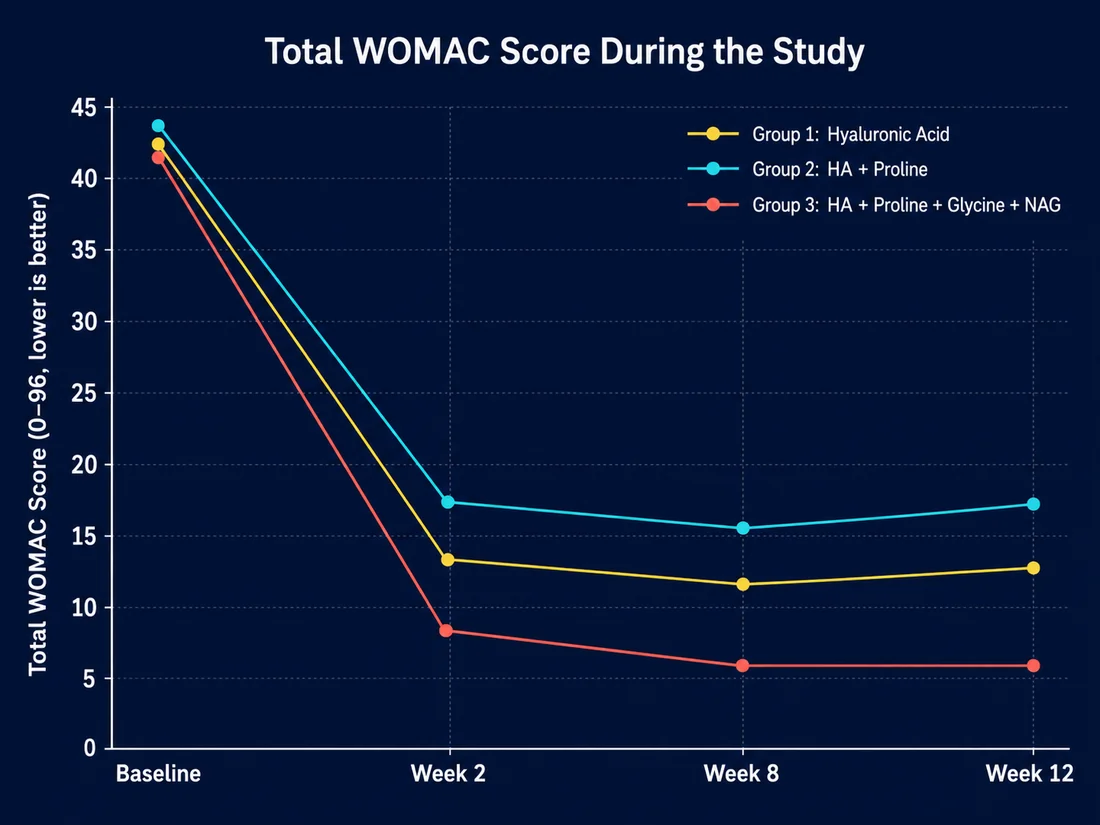
As regards safety, the only adverse event observed was transient post-injection pain in some patients; it was no more frequent with any of the preparations and resolved gradually.
Discussion and clinical implications
In the group treated with the four-component combination the improvement was more pronounced and more durable. The effect can be attributed to the ability of NAG to increase the amount of type II collagen and to stimulate the synthesis of HA and glycosaminoglycans, and to the role of the amino acids glycine and proline in the structure of collagen. The four-component combination offers better efficacy, more stable long-term improvement and a longer duration of action — while maintaining safety comparable to that of conventional HA. The combination of HA with proline, glycine and N-acetylglucosamine (ALGYL GGP) thus represents a well-tolerated and effective treatment option for gonarthrosis.
Commentary of an orthopaedic surgeon
Prof. Dr. habil. Pavel Dufek (Sporthopaedic, Hamburg): “The new preparation ALGYL GGP, based on a four-component combination of biogenic substances with proven, mutually complementary efficacy, is a welcome advance. Combining hyaluronic acid, N-acetylglucosamine and the amino acids glycine and proline in a single intra-articular preparation is a rational strategy that allows several active substances to be delivered in one administration. I have experience with the preparation not only in gonarthrosis but also in other pathological conditions of the knee joint, for example in sports medicine.”
Options for combination with other preparations
Within intra-articular treatment, ALGYL GGP can be combined with PRP (platelet-rich plasma). In a sequential regimen it can be followed by ALGYL COLL (linear HA + recombinant human collagen), which provides continuing viscosupplementation and structural support.
Source: Kaval B. (2025); Gök O. (2024); patent WO 2024/080954A1. Scientific editorial team, Edukafarm. The text is of a professional nature and does not replace the current instructions for use (IFU) or individual clinical judgement.